
Custom Prosthetic Eye vs. Stock: Which One is Better?
When it comes to prosthetic eye fit, comfort, and appearance, not all options deliver the same results. Here’s what to know before making a decision that affects your daily life.
When Mark first received his prosthetic eye, he was told it would take some getting used to. At first, it did. But months later, he still found himself adjusting to small discomforts: extra drainage, a sense of tightness, and a color match that felt close, but not quite right.
He began to wonder: Was this just part of the process, or was there another option?
Many people don’t realize there are two distinct paths when it comes to prosthetic eyes: stock or custom. This guide walks through the differences — not just in how they’re made, but in how your experience can improve day to day.
What’s the Difference Between a Stock and Custom Prosthetic Eye?
While stock and custom prosthetic eyes serve the same basic purpose, they differ significantly in several factors. The table below breaks down the key differences to help you see which option might be the best fit for your needs.
|
Factor |
Stock Prosthetic Eye |
Custom Prosthetic Eye |
|---|---|---|
|
Standard sizes |
Socket impression, exact fit |
|
|
Can cause pressure/drainage |
Designed for long-term comfort |
|
|
Limited shades, less natural |
||
|
Lower upfront |
Higher upfront, better value |
|
|
Quick, minimal adjustment |
Detailed, personalized process |
|
|
Replaced sooner |
Lasts years with care and maintenance |
The main difference comes down to how each type is made, and how it fits your eye socket over time.
A stock prosthetic eye is pre-manufactured in standard shapes and shades. An ocularist selects the closest match and makes surface-level adjustments. It’s a faster process, often chosen for convenience or cost, but it may not account for the unique shape of your eye socket.
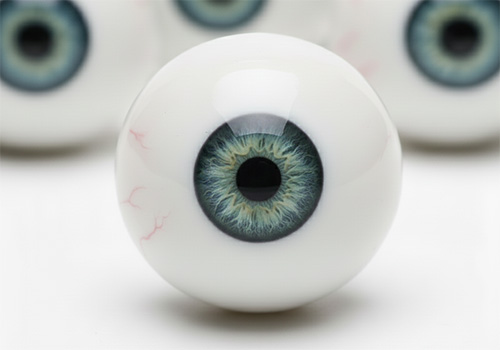
A custom prosthetic eye begins with a detailed impression of your socket. From there, a wax model is sculpted, color-matched by hand, and carefully fitted to mirror the natural eye as closely as possible.
While both options serve a purpose, custom eyes are often associated with a more natural appearance and better long-term comfort. This can help reduce issues like drainage, pressure points, or subtle misalignment.
Why Does Fit Matter in a Prosthetic Eye?
A prosthetic eye might look fine at first, but how it fits will shape your experience in ways that aren’t always obvious right away.
When the fit is off, even slightly, patients often report:
- Persistent drainage that can become frustrating to manage
- A sense of pressure or tightness in one area of the socket
- Movement or shifting during facial expressions or throughout the day
- General discomfort that doesn’t improve over time
These issues can be especially common with stock prosthetic eyes, which are not shaped to match the unique anatomy of each socket.
Custom eyes, on the other hand, are made from an impression of the socket. That detail allows for a closer fit, which may improve comfort and help the prosthesis sit more naturally throughout the day.
How Comfortable Is a Prosthetic Eye Supposed to Be?
- Stock prosthetic eyes are not made for a specific socket, which means comfort is often a matter of compromise. Even if the appearance is acceptable, the daily experience can be frustrating. That might include rubbing, uneven pressure, or soreness by the end of the day.
- Custom prosthetic eyes are shaped from an impression of your socket, which helps create a smoother interface between the eye and the surrounding tissue. More importantly, the process includes time for feedback and fine-tuning because small changes can make a big difference in how it feels.
Will My Prosthetic Eye Actually Look Like My Real One?
It’s a common question — and an important one. Stock prosthetic eyes are made in standard colors and patterns, so the match might be close, but rarely exact. Small details like iris depth, veining, or the whites of the eye can feel slightly off. Custom eyes, like the ones made at Carolina Eye Prosthetics, are hand-painted and color-matched to each individual. That level of detail helps the prosthesis blend in naturally.

[Anna’s] artistic skills in drawing and coloring … the eye looks spot on,” says Kristen. “It pops in right over my smaller eye.”
– Kristen Mitchell, CEP Patient –
Some patients are surprised by how specific the process gets. That’s intentional. Your eyes are one of the first things people notice. A custom approach helps make sure they notice you, not your prosthesis.
Is a Stock Eye Really the More Affordable Option?
At first glance, a stock prosthetic eye can seem like the simpler choice. It’s quicker to receive, costs less upfront, and may feel “good enough” at the beginning.
But the real story often unfolds later. For some patients, that initial savings gives way to a cycle of adjustments, discomfort, or dissatisfaction with how the eye looks and feels over time. What seemed affordable at first can turn into repeat appointments, additional costs, or even the decision to start over with a better-fitting eye down the line.
Thankfully, there are several ways to plan for the cost of a prosthetic eye. You can find a full breakdown of financing options, and support resources in this guide.
Not All Custom Eyes Are Truly Custom
It’s also worth noting that not all custom prosthetic eyes are created with the same level of precision or care. This is a long-standing field, and while many ocularists offer custom options, the quality of materials, color-matching, and attention to feedback can vary.
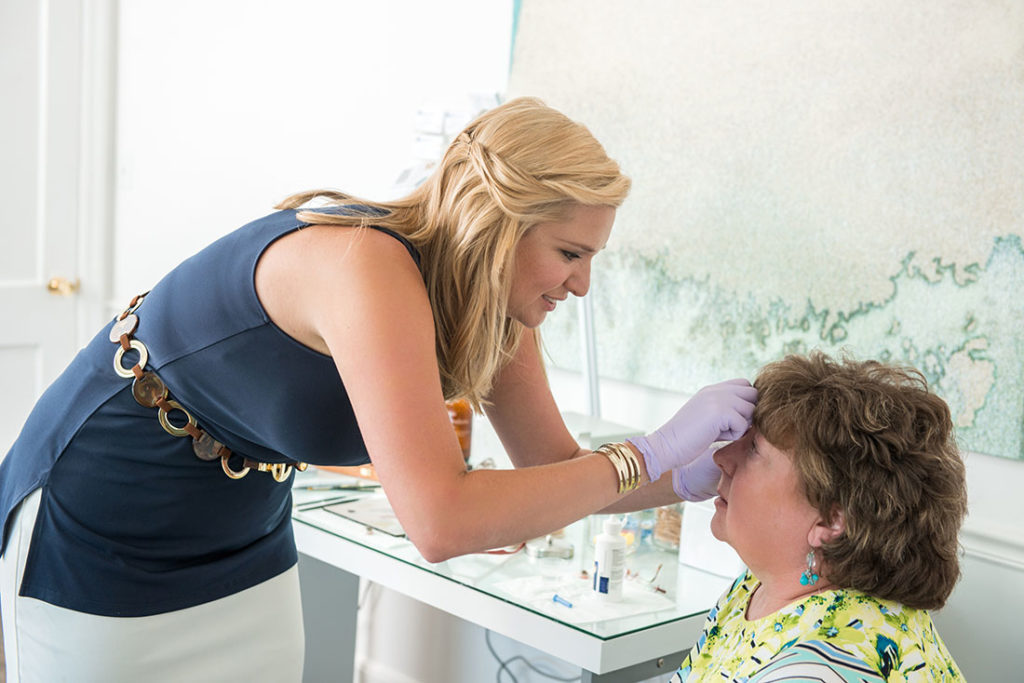
At Carolina Eye Prosthetics, the process is intentionally hands-on. Each eye begins with a detailed impression of the socket, followed by a wax fitting, color matching, and multiple checkpoints for patient input. That extra time ensures the final result is shaped by both anatomy and experience.
Patients who’ve received custom eyes elsewhere sometimes come to us after years of “making do” with an eye that still didn’t feel quite right. A well-made custom eye takes time, but it also pays off. It can reduce the need for constant fixes and blend in without drawing attention.
Why Choose Carolina Eye Prosthetics?

Patients leave with more than a prosthetic eye; they leave feeling whole again. They knew they were part of the process, and that it mattered.
Patients who’ve received custom eyes elsewhere sometimes come to us after years of “making do” with an eye that still didn’t feel quite right. A well-made custom eye takes time, but it also pays off. It can reduce the need for constant fixes and blend in without drawing attention.
Frequently Asked Questions
In many cases, yes. Because a custom prosthetic eye is shaped to the exact contours of your socket, it often leads to less irritation, better moisture balance, and a more secure fit over time. Stock eyes, while functional, can cause drainage or discomfort if the fit isn’t quite right.
With proper care and routine polishing, a custom eye can last several years. Over time, natural changes in the socket may require adjustments or a new fit. Regular evaluations help ensure the eye continues to feel and function well.
Not all custom prosthetic eyes are made with the same level of detail or care. If you’ve had a disappointing experience elsewhere, we encourage you to contact us for a consultation. We often work with patients who’ve tried other options and are looking for something more precise or comfortable.
If you’re experiencing new drainage, a change in fit, or feel that the appearance no longer matches your natural eye, it may be time for a new prosthesis or a refitting. A simple evaluation can help determine the best next step.
 English
  Spanish